Akido Labs And The Coming Shift To AI-Enabled Medicine
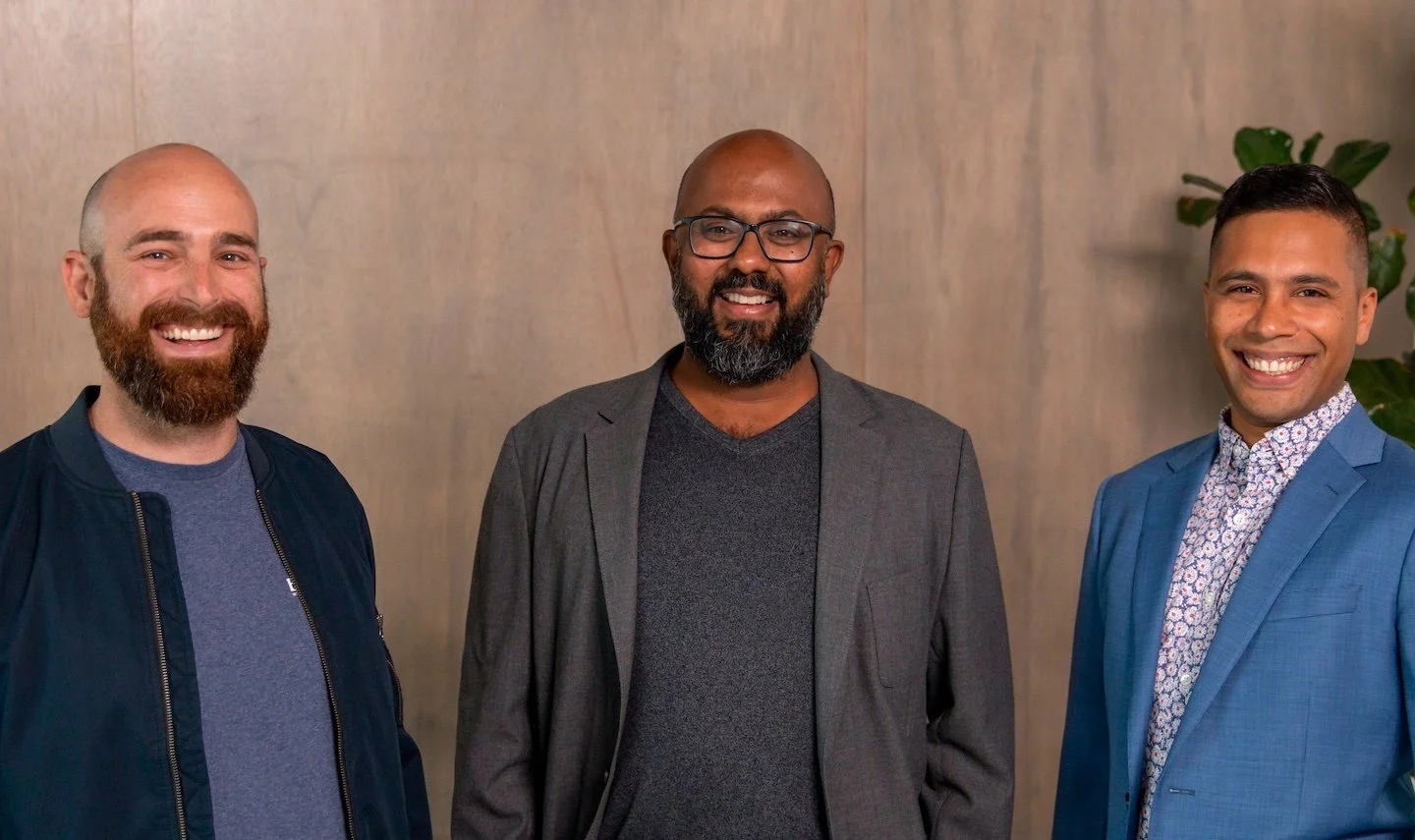
Akido co-founders Jared Goodner, Sanjit Mahanti, and Prashant Samant.
American healthcare has a math problem: rising demand outstrips limited supply. The result is long waits and uneven access. Women in Boston wait an average of 84 days to see a gynecologist. Men in Portland wait more than 100 days to see a dermatologist.
Many organizations are now turning to AI to make care more efficient, incrementally expanding access. But step-change gains rarely come from bolt-on tools. They come from new care models—often run by organizations built specifically to support them.
Akido Labs is one such company. It’s quietly developing an AI-enabled care model designed to dramatically expand capacity. To see how it works, and what it signals for healthcare’s future, let’s start at the beginning.
Origin Story: A Data-First Company
Akido didn’t start as a healthcare provider. It began as a data project inside the USC Keck School of Medicine’s Digital Health Lab, where its founders spent years building a large dataset to train machine learning models. Their early work attracted partners, grants, and eventually a spot in Y Combinator, where they spun out Akido Labs.
The company initially focused on using its models to help public health organizations and provider groups coordinate care and predict outcomes. Akido’s models worked, and early deployments were promising. But its leaders soon realized that without deeply integrating into care delivery, its impact would be limited. Akido needed to become more than a software company.
Strategic Pivot To Full-Stack Provider
So, in 2022, Akido went from a tech provider to a full-stack healthcare provider by acquiring Chaparral Medical Group, a multispecialty practice outside Los Angeles. By owning and operating a medical group, Akido could gain deep insight into clinical workflows, align with clinicians and staff around shared goals, expand the data used to train its AI models, and apply AI insights directly to care.
This approach also unlocked what CTO Jared Goodner calls a “living-learning laboratory where technology and operations evolve together.” Akido develops purpose-built technology in partnership with clinicians, who annotate data and validate output as part of their daily work.
As CEO Prashant Samant explained, “Akido’s north star is boosting capacity exponentially, not incrementally.” To date, the company has raised more than $100 million, most recently securing $60 million in a Series B round led by Oak HC/FT.
Its Akido Care medical network now includes almost 100 brick-and-mortar clinics where nearly 250 clinicians across 26 medical specialties care for over half a million patients annually through commercial, Medicare, and Medicaid contracts.
A large engineering team builds and maintains the key digital infrastructure, including its homegrown electronic health record, and ScopeAI, a suite of AI models that power workflows across settings.
Under the hood, ScopeAI runs on a robust dataset built from years of integrating clinical and social information. It uses an ensemble of predictive and generative models, each responsible for part of the visit, from guiding interview questions to assembling a differential diagnosis and recommending potential actions. Before expanding into a new specialty, Akido validates the model’s accuracy, and clinicians remain in full control once it’s deployed.
Akido’s New Care Model
DeAndre Siringoringo is a Californian in his mid-20s with an easy warmth that makes people feel as if they already know him. He reflects the qualities Akido prizes in its “concierge” medical assistants: hospitality, empathy, and a natural ability to make patients feel comfortable.
After check-in, DeAndre brings patients to an exam room, where he takes vitals and reviews medications. Together, they talk through the reasons for their visit. ScopeAI listens in, guiding his next question while assembling a preliminary differential diagnosis and treatment plan in real time. Intake typically takes about 30 minutes for new patients and 15 minutes for established ones.
Once the intake is complete, the system notifies clinicians like Pomona-based cardiologist Dr. Haritha Alla that it’s their turn. Before entering the exam room, she reviews the AI-generated progress note, leading diagnoses, and suggested care plan—each with a log of exclusions and justifications for transparency. She then meets the patient and verifies or refines the diagnosis and plan. Her adjustments become feedback that helps improve ScopeAI.
The aim is to let AI-enabled concierges like DeAndre collect the right information so clinicians like Dr. Alla can conduct multiple visits in parallel. ScopeAI also generates the visit note and lays out its clinical reasoning, giving clinicians a structured starting point so they can spend their time confirming diagnoses and tailoring the plan. Because clinicians make all final decisions, the system qualifies as clinical decision support and is exempt from FDA medical-device regulations.
Early results have been promising. ScopeAI-powered visits are typically booked within one business day, and clinics using the system have seen 57% more patients year-to-date. Some clinicians have already doubled their patient volume, and Akido envisions the potential for up to a fourfold increase in certain specialties without compromising quality or the patient experience.
Does Akido Forecast Healthcare's Future?
As William Gibson famously stated, “The future is already here. It’s just not evenly distributed.” Akido offers a glimpse of what tomorrow’s healthcare might feel like.
Over the past two decades, as electronic health records grew more complex and data needs intensified, many healthcare organizations outsourced software development to vendors. Akido began as one of those vendors—and quickly learned that providing software alone limited its impact. So it dove headfirst into clinical care, gaining control over operations, owning the factors of production, aligning incentives, shaping culture, and enabling engineers and clinical teams to work side by side. The advantages are easy to see.
Will more provider organizations start developing their own software again? Or will more software companies follow Akido’s lead and become full-stack care organizations?
Akido also signals how patient experiences may evolve in an AI-infused world. Today, Akido patients can wait for a traditional visit or choose a faster ScopeAI-supported visit, spending more time with a medical assistant (and the underlying AI) and less with a physician. Concierge DeAndre Siringoringo explained that while some patients are initially hesitant, most welcome being seen quickly and receiving his sustained attention. Akido reports net promoter scores above 90.
CTO Jared Goodner told me it would be technically simpler to let patients converse with an AI agent on their own. But Akido sees value in having an MA serve as the human interface to ScopeAI, especially given the disproportionately vulnerable and elderly population it serves. Other organizations may have patients interact directly with AI.
Akido also hints at how future clinicians like me may work. More routine tasks will be automated. We’ll gather less data ourselves and spend more time reviewing and adjusting AI-generated output. Done well, this can supercharge practice—freeing us to care for more patients, focus on those who need us most, and make better decisions.
Akido’s Dr. Haritha Alla explained, “With Scope, I can see double the patients in the same period of time. This means my patients have much more access to me and I can add new patients, which is unheard of in the current moment with physician shortages.”
But the tradeoffs are real. Eliminating the “chitchat” that builds rapport may depersonalize care and drain joy from practice. Offloading “easy” cases to AI could eliminate the breathers we need. And practicing with less direct control requires vigilance against automation bias and the judgment to step in when needed—because we ultimately remain responsible for errors. In many ways, this new type of practice resembles how teaching physicians have long supervised residents and fellows.
Practices must also adjust. As AI removes constraints on physician time and knowledge, new bottlenecks will emerge elsewhere. A fourfold increase in patient volume, for example, demands more exam rooms and more capacity for the downstream tasks that follow visits, such as handling messages, reviewing test results, and processing referrals.
Yet given American healthcare’s general underperformance, we often stand to gain more than we lose from these shifts. Ultimately, harnessing AI in care will require not just better technology, but redesigned care models, a rebalanced workforce, and a culture that evolves alongside them. Organizations like Akido, which are approaching this thoughtfully, show what’s possible—and offer examples the rest of us can learn from as the future takes shape.